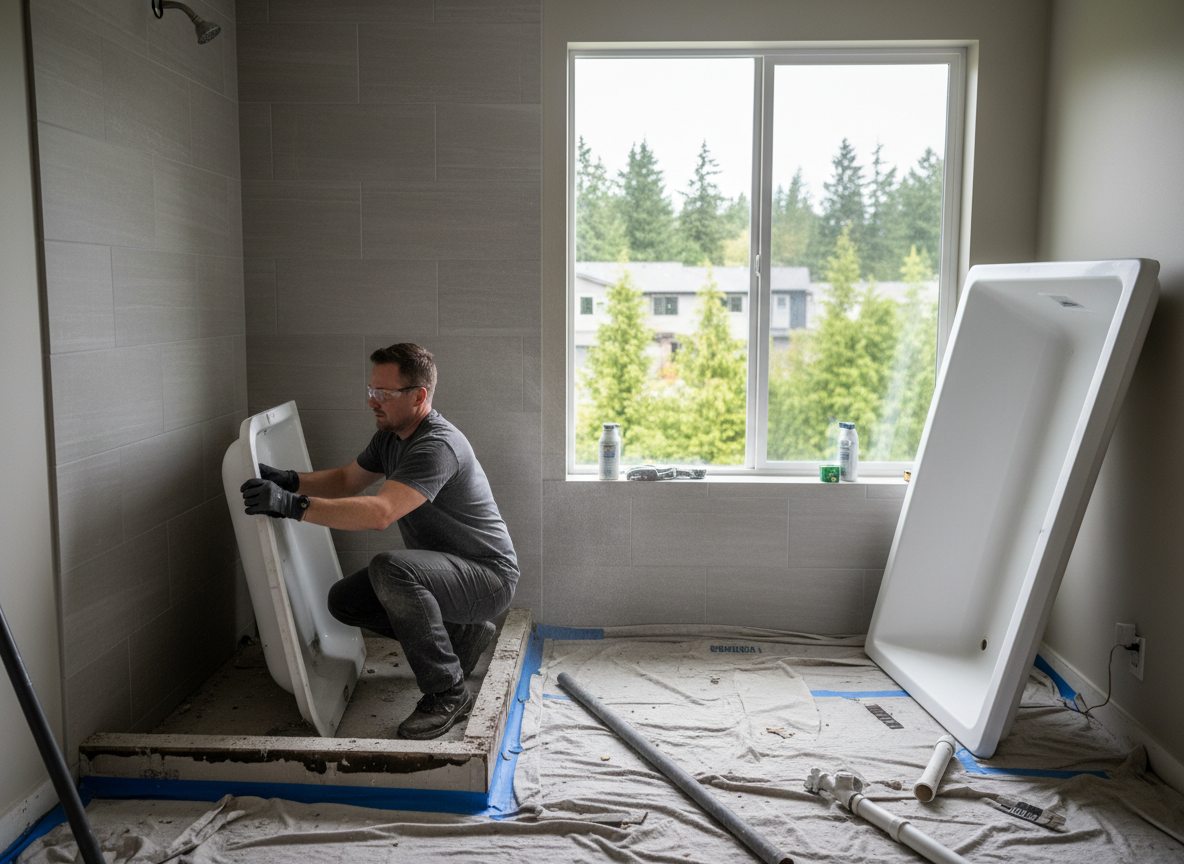
Bellevue homes built before the 1990s in neighborhoods like Eastgate and Somerset often feature cast-iron waste lines and steel tubs set in concrete backings. Removing these units requires cutting through multiple layers of subfloor while protecting adjacent plumbing that has already seen decades of condensation from mild oceanic winters. Skipping proper moisture barriers during reinstallation leads to rot that spreads quickly once fall rains return.
King County permitting for tub replacements in multi-story homes near Lake Washington demands updated waterproofing at the pan and wall intersections. Crews working in Factoria or Crossroads routinely discover shifted joists from decades of minor leaks that were never addressed. New acrylic or cast-iron tubs must be leveled to the existing drain slope or the trap will hold water and create odors.
Wet winters also mean higher indoor humidity during the weeks a bathroom sits open. We install temporary exhaust setups tied to existing vents and schedule final tile work only after the substrate reads below 12 percent moisture. This step prevents tile failure that shows up two seasons later when homeowners in Downtown Bellevue or near Bellevue Square start noticing grout discoloration.
Access limitations in Lake Hills split-levels and narrow hallways around Meydenbauer Center require tub sections to be carried in pieces rather than as a single unit. We coordinate with neighbors for driveway staging and protect hardwood floors that run through the main living areas, a detail that matters when replacing tubs on upper levels.
Technician insight
In Bellevue the thing that catches most people out with Bathtub Replacement is hidden rot along the back wall where years of condensation from wet winters has wicked into the drywall behind older tile. Homes in Lake Hills and Eastgate often show this once the old tub comes out, and the fix changes both the timeline and the final cost.
Factoria Two-Story Leak Discovery
A homeowner in Factoria called after noticing ceiling stains downstairs. We opened the upstairs tub surround and found saturated joists from a decades-old hairline crack at the drain. The subfloor was sistered, new waterproofing was added, and a low-profile acrylic tub was set to restore the original floor height.
How it works
- 1
Site Assessment
We measure the existing tub footprint, inspect the waste line condition, and check for rot in the subfloor while noting any slope issues common in older Crossroads homes.
- 2
Old Tub Removal
The tub is cut into manageable sections, debris is contained, and the drain assembly is tested before any new work begins to avoid surprises from decades-old cast iron.
- 3
Subfloor And Waterproofing Prep
Damaged sections are replaced, new moisture barriers are installed, and the area is dried to winter humidity levels before the new unit goes in.
- 4
New Tub Installation And Finish
The replacement tub is set, connected, and sealed; final tile or surround work follows once the structure passes inspection.
Pricing
Pricing varies with tub material, access constraints, and any subfloor repairs required after inspection.